Depuis de nombreuses années, les coupures de courant planifiées en Afrique du Sud sont devenues un phénomène quotidien pénible pour les ménages et les entreprises. Mais quelle est la raison de cette crise permanente ? Dans cet article, nous allons explorer les multiples causes de la situation difficile de l'Afrique du Sud en matière d'électricité.
Facteurs clés de la pénurie d'électricité à long terme
Pour comprendre les défis auxquels l'Afrique du Sud est confrontée en matière d'approvisionnement en électricité, nous devons nous pencher sur les problèmes sous-jacents. Il ne s'agit pas de simples défaillances techniques, mais de problèmes systémiques qui se sont accumulés au fil du temps.
Installations de production d'électricité vieillissantes
La plupart des centrales électriques existantes ont été construites entre les années 1960 et 1990, et leur durée de vie moyenne dépasse les 30 à 50 ans. Ces centrales étaient fiables dans le passé, mais des problèmes sont progressivement apparus en raison d'un fonctionnement à forte charge à long terme et d'une maintenance insuffisante.
Les défaillances fréquentes des équipements, les arrêts imprévus et les cycles de maintenance prolongés ont considérablement affaibli la capacité de production d'électricité disponible.
Bien que deux centrales électriques, Medupi et Kusile, aient été construites en 2007, il était trop tard pour prévenir la crise de la pénurie d'électricité qui était déjà apparue à l'époque.
Dépendance excessive à l'égard du charbon
Selon le Selon les données officielles sud-africaines, la production d'électricité à partir du charbon représente environ 70% de l'approvisionnement en électricité du pays, ce qui fait de l'Afrique du Sud l'une des économies énergétiques les plus émettrices de carbone au monde.
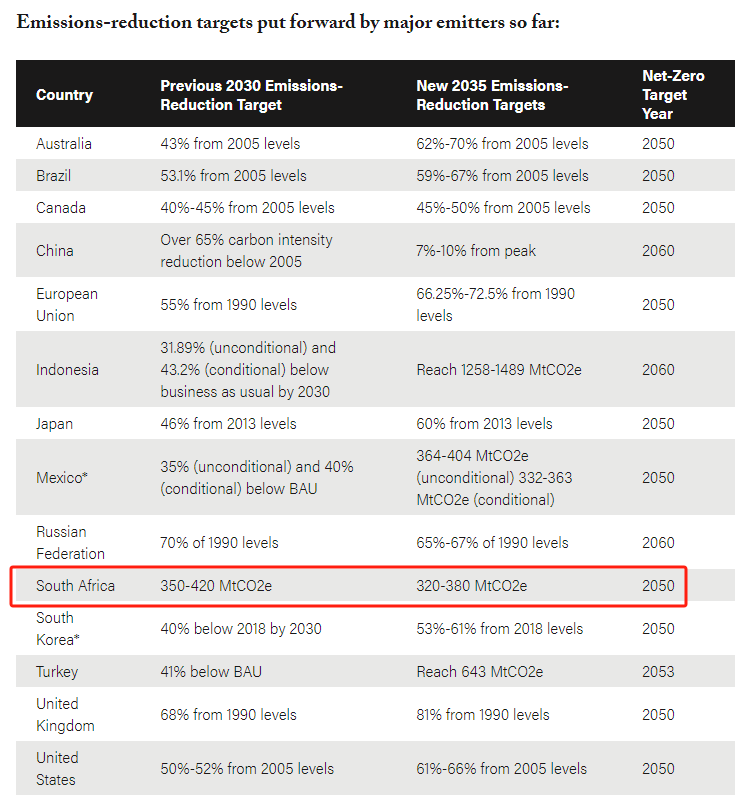
Cette forte dépendance à l'égard du charbon soumet l'Afrique du Sud à une double pression : d'une part, les exigences internationales en matière de respect des engagements de réduction des émissions (une réduction de 350 à 420 millions de tonnes de CO₂e d'ici à 2030) ; et deuxièmement, les problèmes de santé causés par la pollution de l'environnement domestique.
 Bien qu'en janvier de cette année, l'énergie solaire et l'énergie éolienne représentaient respectivement 11,28% et 4,94% de la production totale d'électricité de l'Afrique du Sud, l'énergie solaire et l'énergie éolienne n'ont pas été prises en compte dans le calcul de la production totale d'électricité.combinée dépassant 16%-la transition globale vers les énergies renouvelables reste lente en raison d'obstacles bureaucratiques et de déficits de financement.
Augmentation de la demande et planification inadéquate
La population et l'économie de l'Afrique du Sud ne cessent de croître, mais la production d'électricité n'a pas suivi. La demande de pointe dépasse souvent l'offre disponible, ce qui oblige Eskom à mettre en place un rationnement de l'électricité par rotation. De même, le réseau électrique est déjà surchargé et, en l'absence d'investissements significatifs dans de nouvelles centrales électriques ou dans l'efficacité énergétique, la pénurie persistera.
Facteurs économiques
Le ralentissement de la croissance économique et la baisse des recettes fiscales ont limité les investissements du gouvernement dans les infrastructures électriques ; dans le même temps, le chômage élevé et l'instabilité sociale ont accru la pression sur la demande d'électricité.
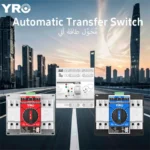
Comment Commutateurs de transfert de puissance doubles Peut aider l'Afrique du Sud à atténuer l'impact?
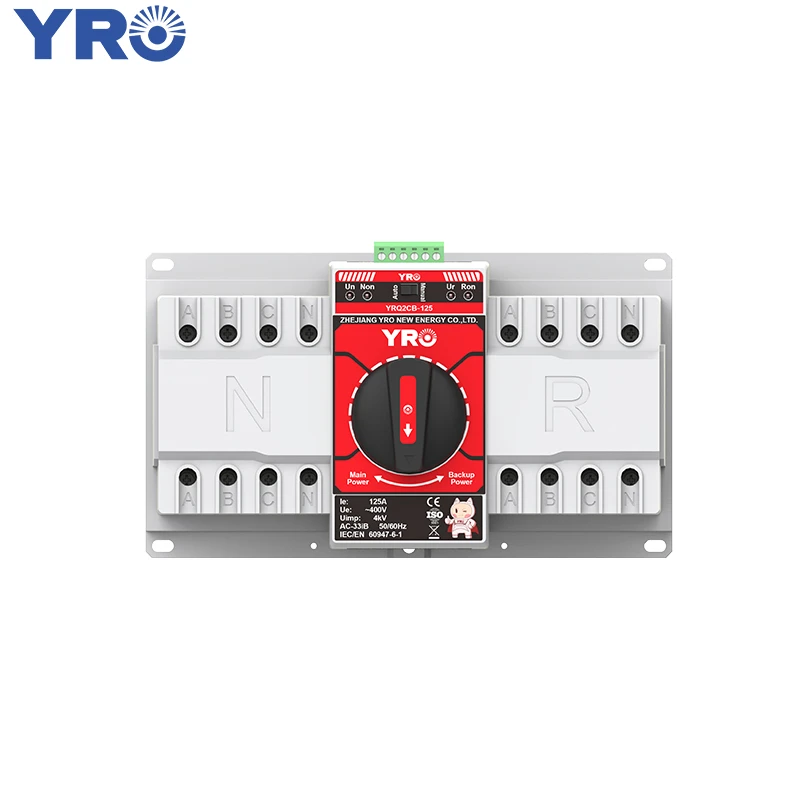
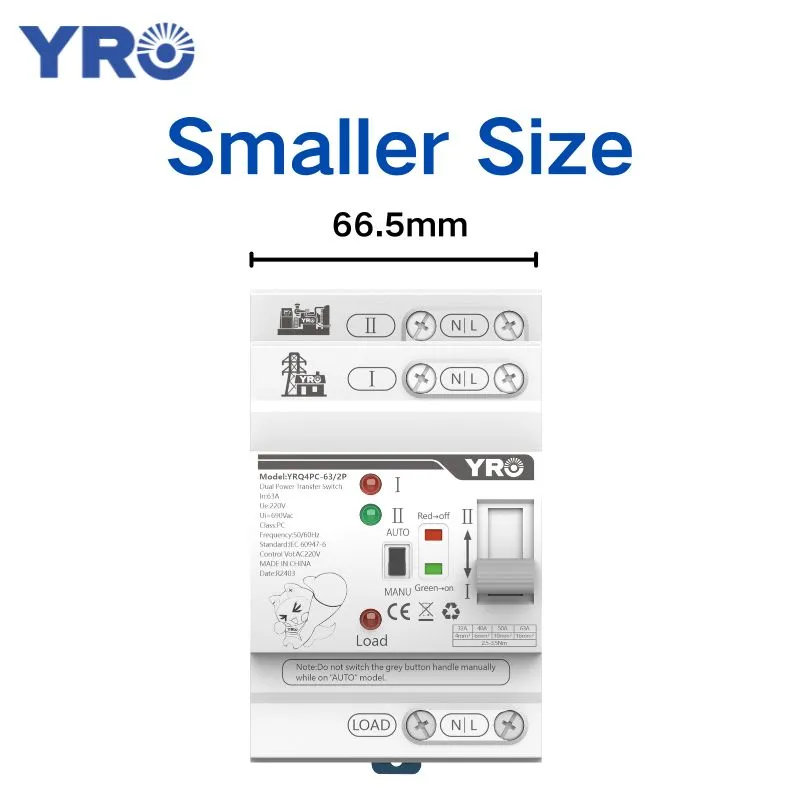
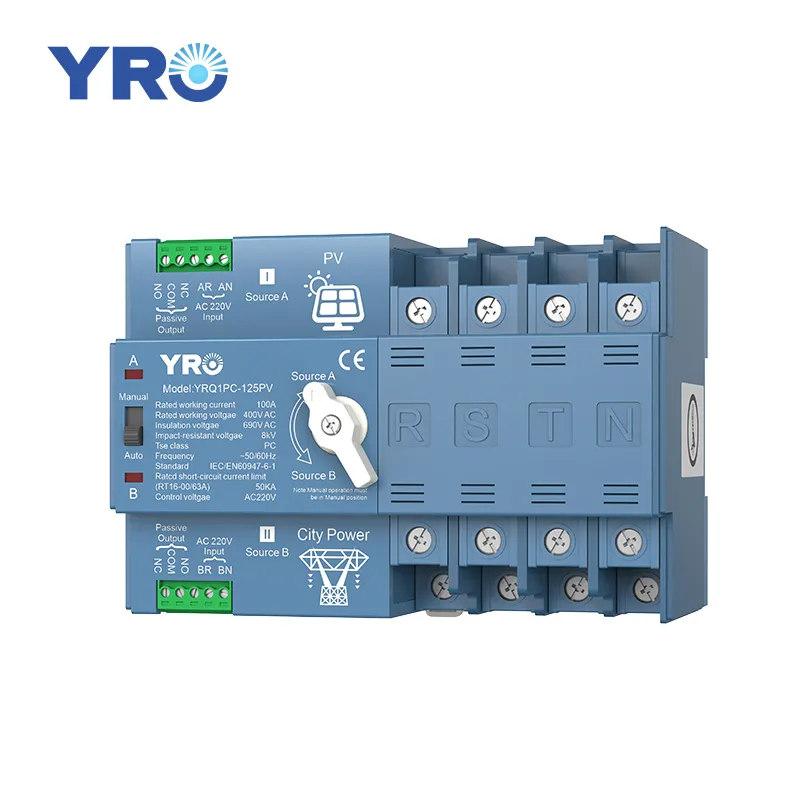
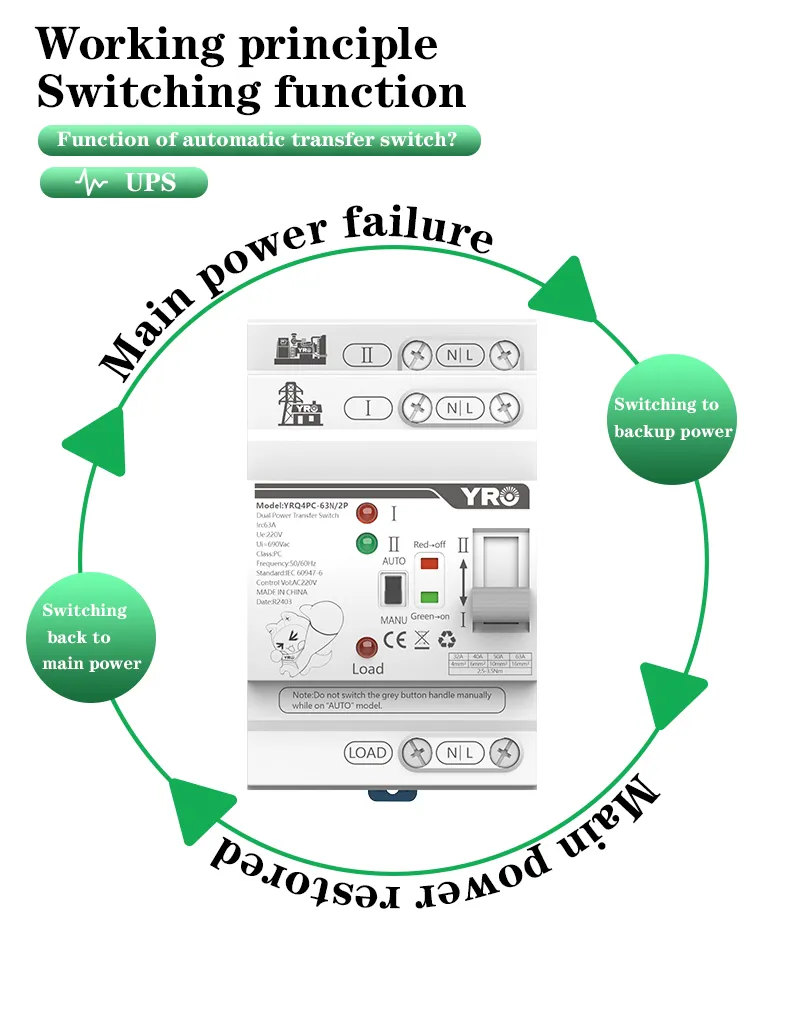
Dans un environnement où les coupures de courant sont fréquentes et imprévisibles, de nombreuses industries ont besoin d'une commutation rapide et fiable entre le réseau électrique et les sources d'alimentation de secours. ATS et MTS offrent cette fonction.
ATS est un commutateur de transfert automatique à double alimentation, qui permet de commuter automatiquement l'alimentation principale et l'alimentation de secours. MTS est un commutateur de transfert manuel à double alimentation. La commutation entre l'alimentation principale et l'alimentation de secours repose sur une opération manuelle.
Ces deux produits sont nés de l'instabilité de l'approvisionnement en électricité de l'Afrique du Sud et de son orientation claire vers la transition énergétique. Dans un avenir prévisible, l'instabilité de l'approvisionnement en électricité restera un véritable problème.
Plutôt que d'attendre que le réseau électrique soit "complètement stable", de plus en plus de familles et d'entreprises choisissent de prendre l'initiative de s'en occuper. En adoptant des plans de gestion de l'énergie raisonnables, elles réduisent les pertes dues aux coupures de courant, protègent leurs équipements et assurent leurs activités quotidiennes.
 Conclusion
 Conclusion
La pénurie d'électricité en Afrique du Sud est due à une combinaison de facteurs, notamment le vieillissement des installations, la dépendance à long terme à l'égard du charbon et l'augmentation constante de la demande d'électricité. Ces problèmes sont difficiles à résoudre à court terme, mais la compréhension de leurs causes est la première étape de leur résolution.
Au cours de ce processus, des produits tels que interrupteurs d'alimentation sans interruption peut contribuer à atténuer l'impact de l'instabilité de l'alimentation électrique quotidienne et favoriser une transition plus harmonieuse de l'alimentation électrique. Face aux défis constants en matière d'énergie, l'adoption de technologies innovantes et de méthodes d'exploitation durables revêt une grande importance pour le maintien de l'approvisionnement en énergie.
Si votre consommation d'électricité est également affectée par l'instabilité de l'alimentation, vous pouvez envisager d'apprendre comment un commutateur de transfert d'énergie de secours peut assurer la protection de votre équipement électrique. Dans le contexte actuel de consommation d'électricité, il est sage de se préparer à l'avance plutôt que d'attendre passivement de faire face à des pénuries d'électricité.