When choosing or configuring a solar combiner box, a frequently mentioned question is: Does the inverter box need to be equipped with a fusible, or is it sufficient to use a miniature circuit breaker (MCB) and a surge protection device (SPD)?
This issue relates to the safety of the system, the convenience of maintenance, cost control, and the reliability of long-term operation. In practical applications, due to the requirements of different national markets, differences in installation habits, and variations in system size, the final choice often varies.
Core Controversy: Is a Fuse “Essential”?
In PV electrical design, both fusibles y disyuntores en miniatura can perform overcurrent protection functions, but their emphases differ:
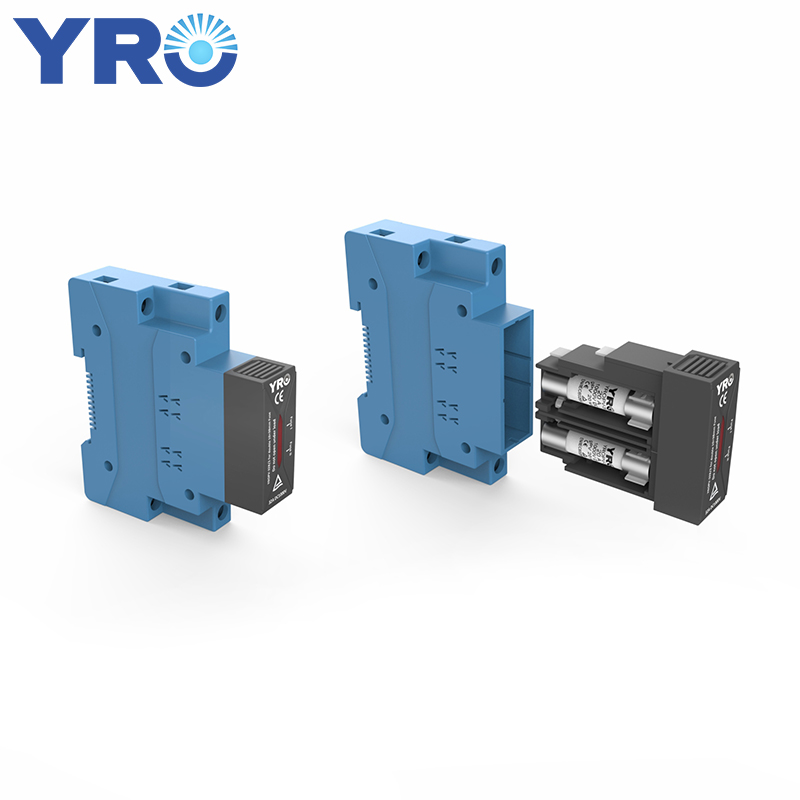
Fuse: Traditionally viewed as the “primary protection” or “backup protection” within a PV combiner box. Its characteristic is being non-resettable (requires replacement after blowing), but it possesses a higher breaking capacity when facing high currents, such as short circuits following SPD failure.
MCB: Traditionally viewed as serving the “switching” function (manual on/off) within a PV combiner box. Its characteristic is being resettable (can be restored after tripping), but its breaking capacity is relatively lower, and it is typically used for branch circuits with lower rated currents.
Why Does the “MCB + SPD Only” Scheme Exist?
With the development of photovoltaic technology and the strengthening of cost control awareness, some manufacturers or designers have proposed a simplified solution.
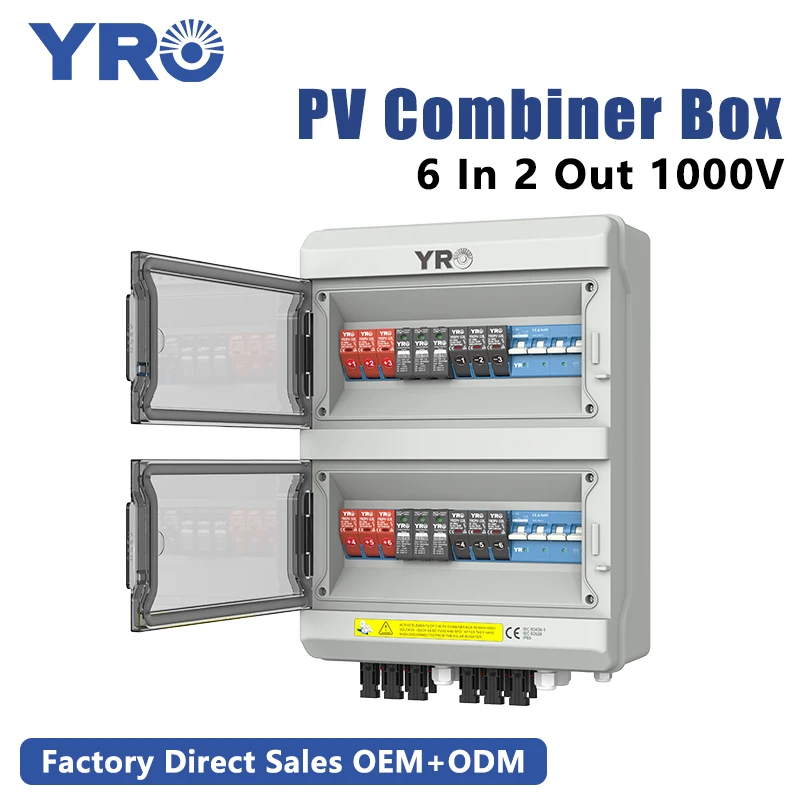
- Coste: In solarcombiner boxes with a large number of parallel string groups, fuses are usually configured for each string incoming line to reduce the risk of reverse current, which will increase material costs and later maintenance costs. To reduce costs, some manufacturers tend to use MCB.
- Tecnología: DC circuit breakers have significantly improved in performance. Their breaking capacity, stability, and consistency under DC conditions are far superior to those of a decade ago, making micro circuit breakers a feasible protection method in appropriate systems.
 Is it Safe Enough Without Fuses, Relying Only on MCB and SPD?
 Is it Safe Enough Without Fuses, Relying Only on MCB and SPD?
The advantages of not using fuses are:
- Reduces the cost of purchasing fuses
- Circuit breakers provide resettable protection, eliminating the need for component replacement
- Simplifies wiring, reducing the number of connection points
- Compact design, saves installation space
However, corresponding limitations exist, and it’s necessary to evaluate whether an MCB is suitable for your electrical system based on the actual situation, primarily focusing on the following two points:
- Insufficient Breaking Capacity: MCBs have a smaller breaking current (typically not exceeding 10kA) when facing high-current surges, making it difficult to meet the high short-circuit current that the combiner box location might experience.
- Excessive Let-through Voltage: When an SPD fails short, a DC circuit breaker passing a large current can generate a relatively high let-through voltage, which may prevent protected equipment from operating normally or cause secondary damage.
If the above issues are not prominent in your usage scenario—for example, if system failure probability is very low, response and handling after an incident can be rapid, and installation space is relatively compact—then MCB + SPD is a suitable choice.
What Are the Advantages of Adding Fuses?
In the design of combinadores solares, using fusibles to provide independent protection for each string of components offers multiple levels of reliability. The key benefit lies in the ability to isolate faults for specific strings, a mature design that can prevent issues in one string from affecting other parts of the array, thus maintaining the continuity of overall power generation.
Moreover, fuses offer higher short-circuit breaking capacity and speed compared to circuit breakers, this effective current limiting helps to suppress the peak energy of fault currents, thereby protecting downstream electrical equipment.
At the same time, fuses generally have a lower price than circuit breakers, which enables them to achieve a good balance between reliability, maintainability and economy in photovoltaic systems with a large number of strings.
If in scenarios where there are a large number of strings, the probability of equipment failure is relatively high, and group-string protection must be implemented, adding fuse protection is necessary.
Conclusión
After comprehensively comparing the two protection configurations, it can be concluded: there is no “best” scheme applicable to all scenarios. Choosing Fuse + MCB + SPD or just MCB + SPD depends on the specific installation project’s technical requirements, budget constraints, maintenance capabilities, and risk tolerance level.
For most modern residential and small commercial installations, the MCB + SPD only configuration achieves a good balance between protection performance, operational convenience, and cost-effectiveness.
For large-scale installations, projects with high reliability requirements, or installations in remote areas, the additional protection layer provided by string fuses still holds value, despite increasing system complexity and long-term costs.
An excellent PV combiner box is not determined by any single component, but rather by whether its overall protection scheme truly aligns with the system’s actual operating environment.