During actual installation and daily use, users who purchase an automatic transfer switch may encounter various problems. These problems are not necessarily caused by the quality of the product itself; rather, they are often related to wiring methods, voltage conditions, and operating habits.
This article will summarize the most common problems encountered by users after purchasing an ATS and provide corresponding solutions. If necessary, this guide can help you reduce unnecessary downtime and improve the stability of the system’s operation.
1、Low Voltage
Some customers report that their ATS fails to transfer automatically. After investigation, it was found that the power supply voltage was unstable, frequently dropping below 170V. The customers purchased a transfer switch rated for 220V. If the power supply voltage is too low, the ATS will delay or refuse to transfer automatically.
Solutions
- Install a voltage stabilizer upstream of the ATS.
- Use an over/under voltage protector for protection.
- If the backup power source is a generator, verify that the generator’s output voltage is stable.
If the system voltage frequently drops below 170V, prioritize resolving the power supply quality issue.
2、Incorrect Mode
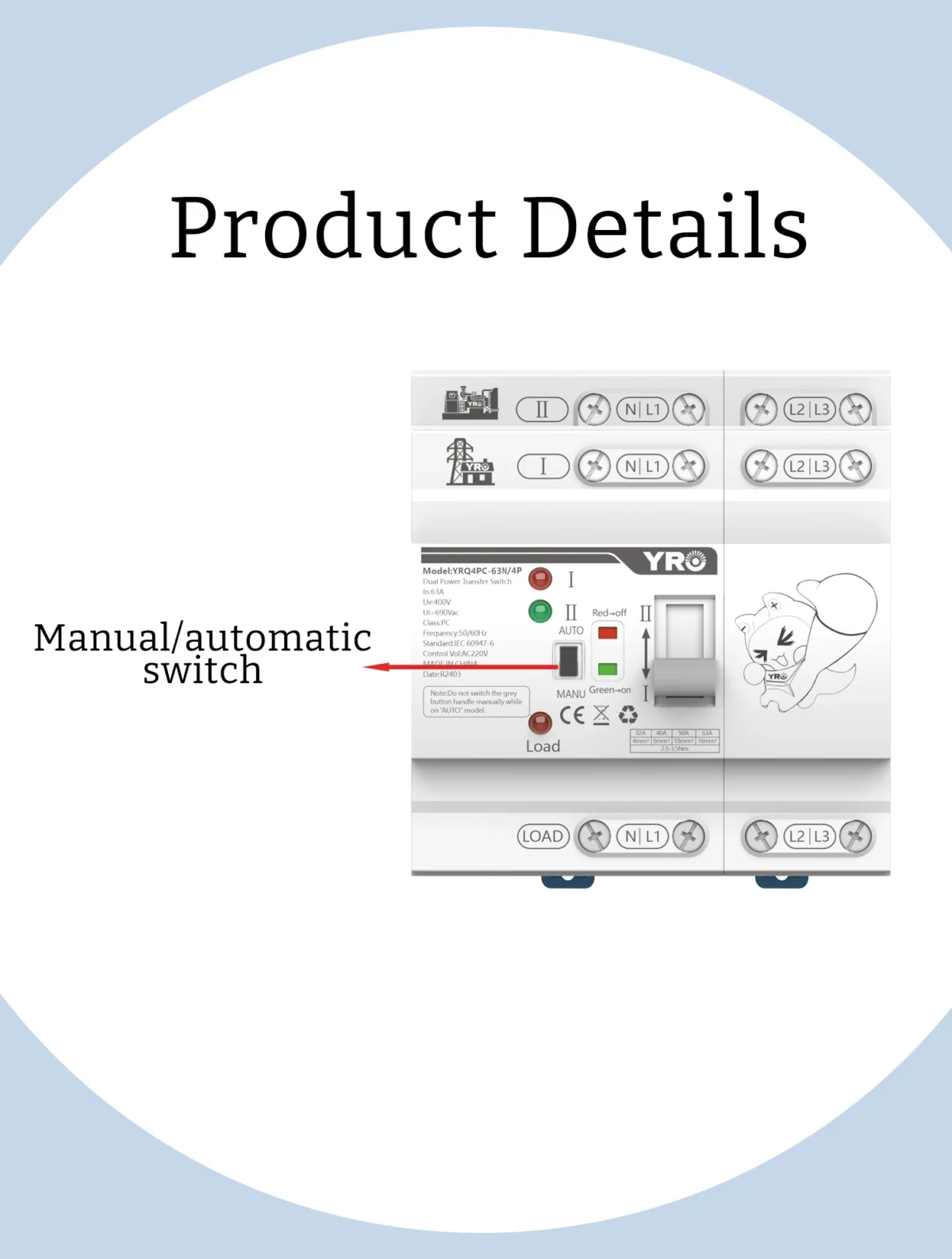
After the conmutador automático de transferencia de potencia is powered on, the customer manually switches the power supply, and then the equipment starts to smoke.
In the automatic mode, the control system of the power transfer switch will automatically judge the power status and control the switch. Forcefully manual switching will interfere with the control logic, causing damage to the control circuit and triggering abnormalities and smoke.
Solution
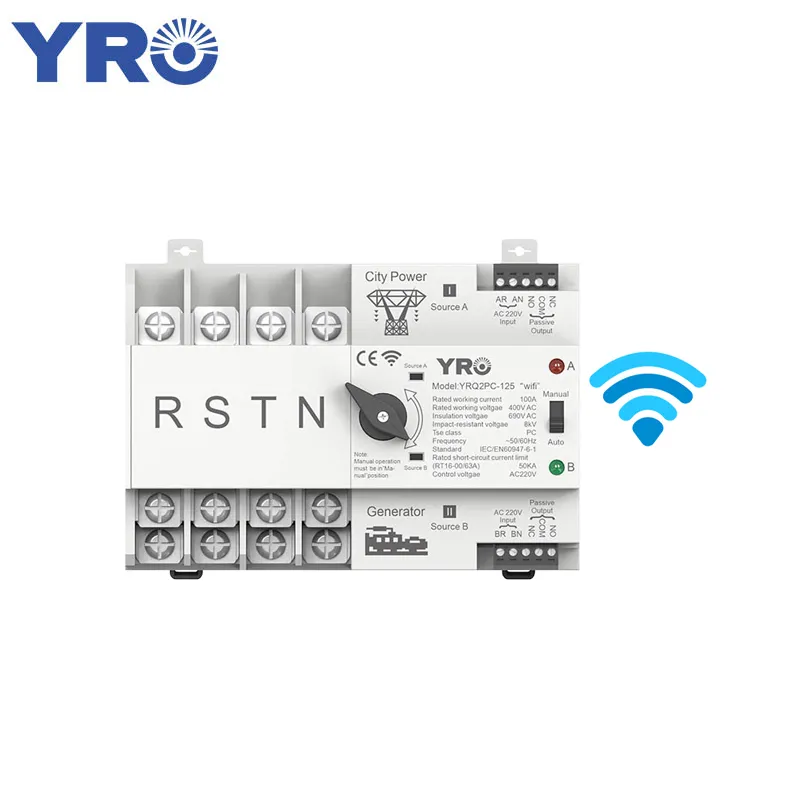
In the automatic mode, do not manually operate to switch the power supply. If manual switching is needed, switch the switch to the manual mode (the WiFi dual power switch is the same).
3、Using the Wrong Wire Gauge
One of the most common mistakes leading to terminal overheating and melting is insufficient conductor cross-sectional area. Under standard conditions, a 63A power transfer switch should use 10mm² copper wire. However, some customers, in an attempt to save costs, only use 6mm² or even 4mm² copper wire.
This practice introduces the following problems:
- Increased resistance
- Increased heat generation during operation
- Overheating terminals
- Aging or burning of the insulation layer
Solutions
- Use copper wires that meet the rated current requirements.
- Tighten the terminals according to the specified torque.
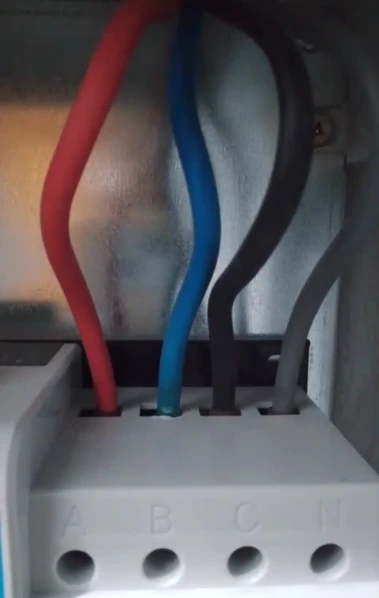
4、Backup Power Source Not Energized
The core logic of the ATS is to continuously monitor the voltage status of the main power supply and the backup power supply, and then decide whether to switch. When the backup power supply is not powered on, the switch will not automatically switch.
Solution
Turn on the backup power supply.
5、Control Terminals Not Wired
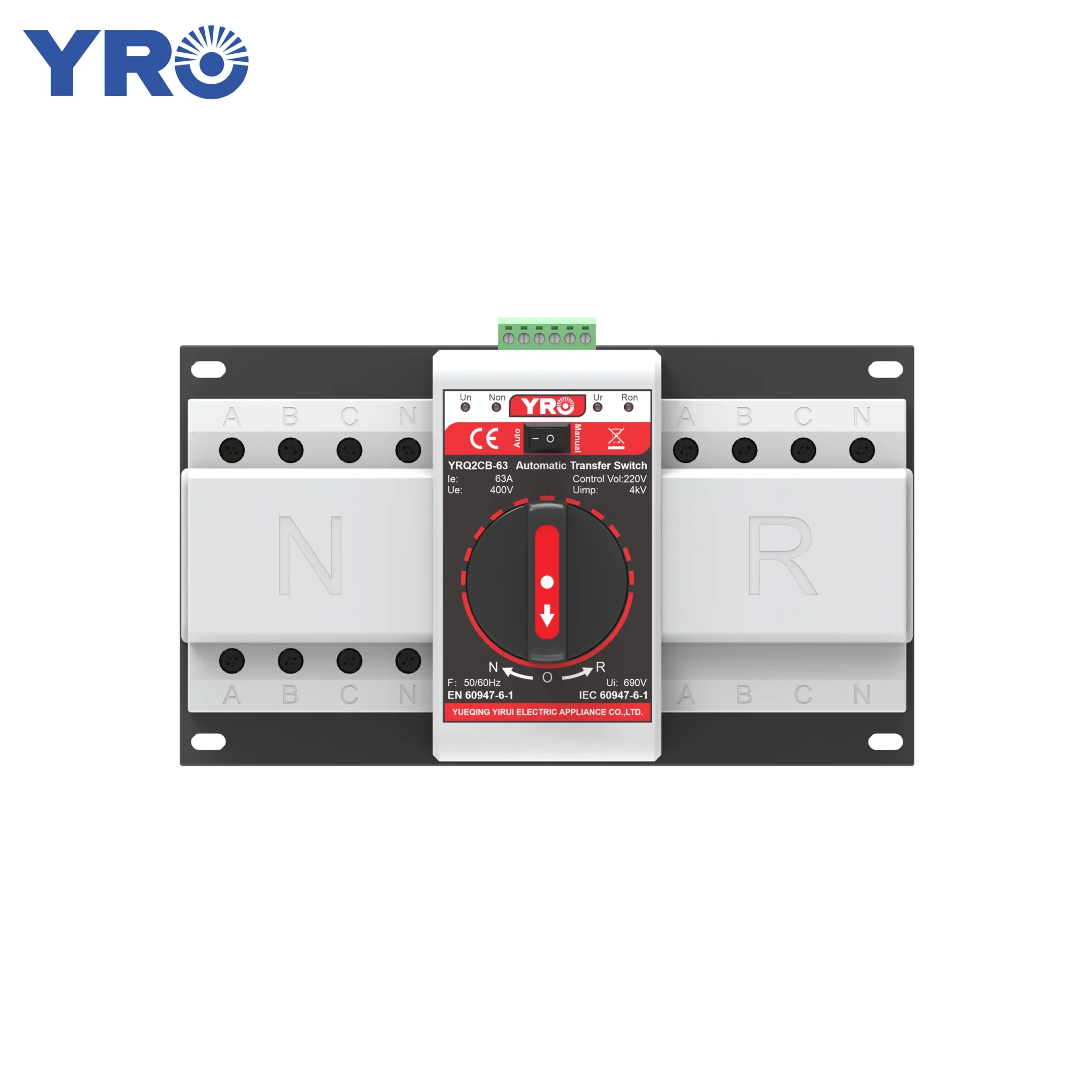
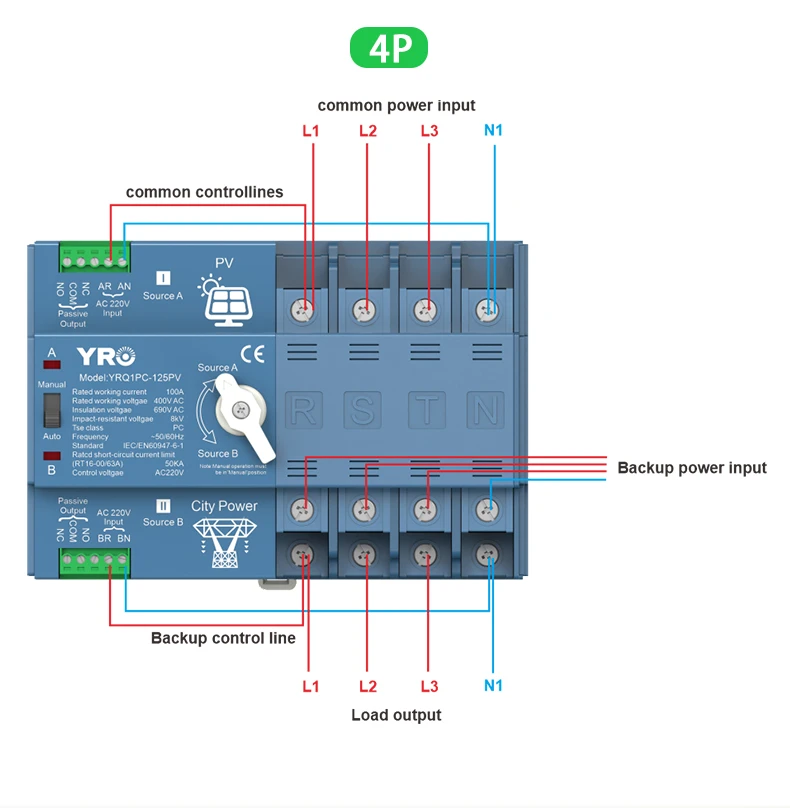
When wiring, please pay attention to the two green terminals on the left side; they are used for connecting the control wires. The control wires primarily provide control signals and detection signals to the equipment, enabling the power transfer switch to judge the power source status and execute automatic transfer. If the control terminals are not connected, the switch’s indicator lights will not illuminate, and it will be impossible to transfer the power source.
Solutions
Connect the wires to the control terminals.
6、Terminals Too Large, Taking Up Space
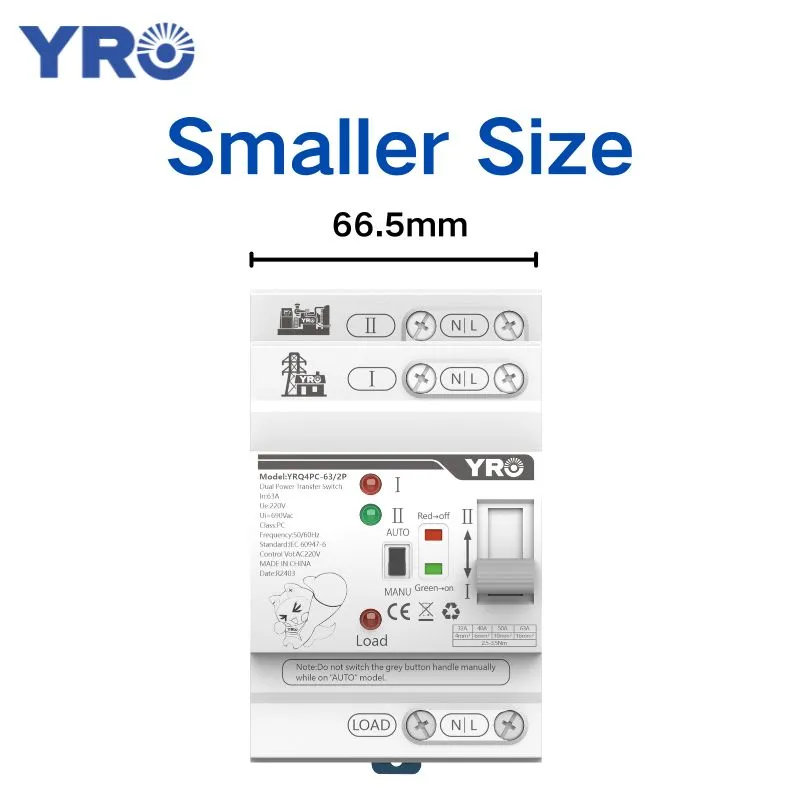
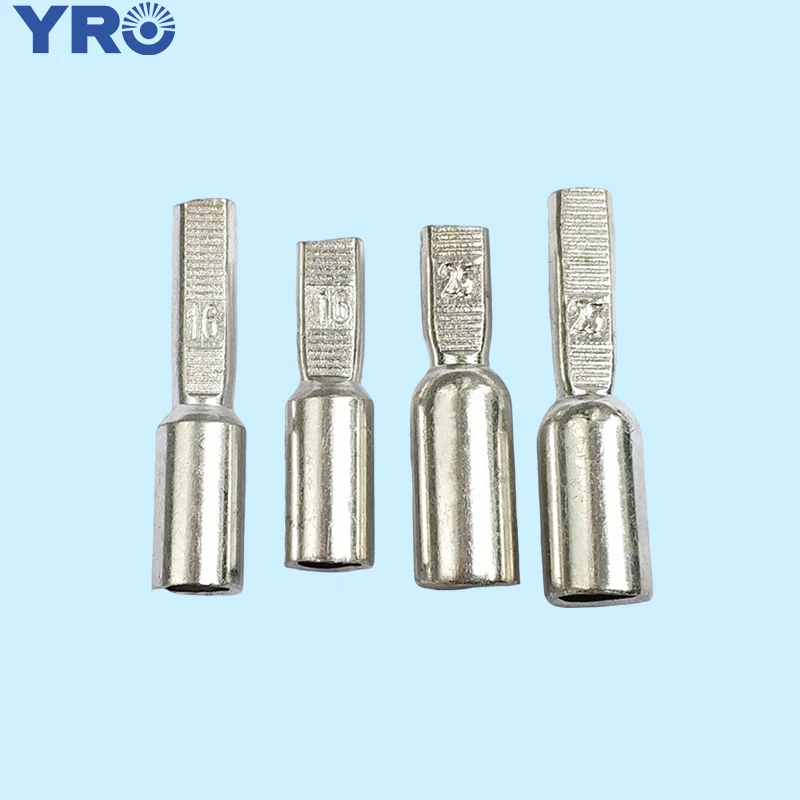
One customer reported that when installing a dual-power conversion switch in a small caja de distribución, the ordinary terminal connectors would occupy a considerable amount of space. Moreover, since 16mm² cables need to be connected, the wiring space further decreased, making it inconvenient for electricians to connect and fix the cables.
Solution
Use pin-type terminal connectors.
Conclusión
Uninterruptible power transfer switches play a vital role in power systems, but their stability depends on correct installation and proper use.
Before determining whether there is a problem with the equipment itself, it is recommended to first inspect various aspects such as the installation environment, wiring methods, power supply conditions, and actual usage circumstances. Adhering to electrical codes and installation standards is essential to ensure stable system operation and extend the equipment’s service life.